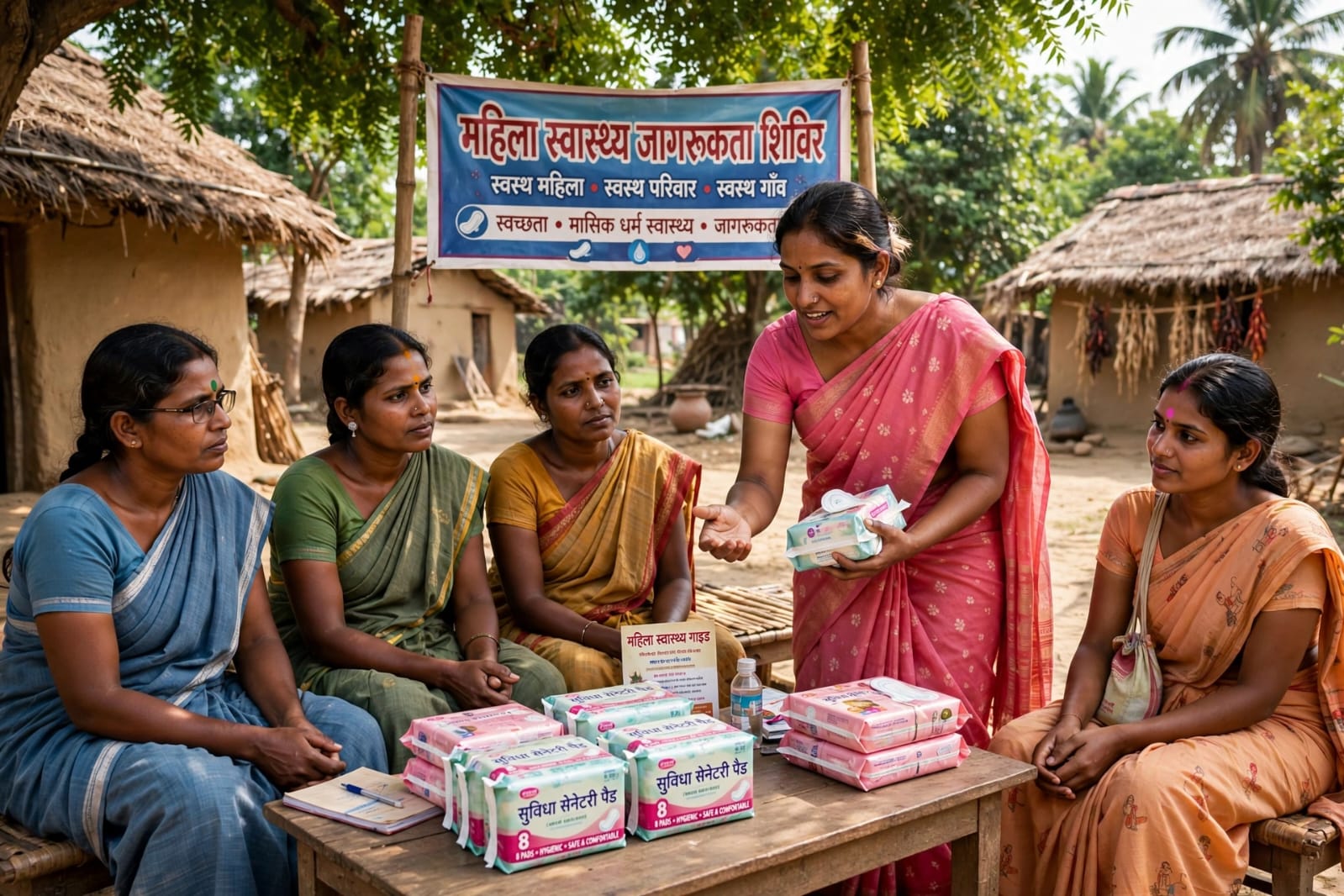
महिला स्वास्थ्य एवं सैनिटरी नैपकिन मशीन
A girl who misses five days of school every month loses close to a sixth of the school year. That is not a health problem alone — it is an education problem, and it compounds every year she stays enrolled.
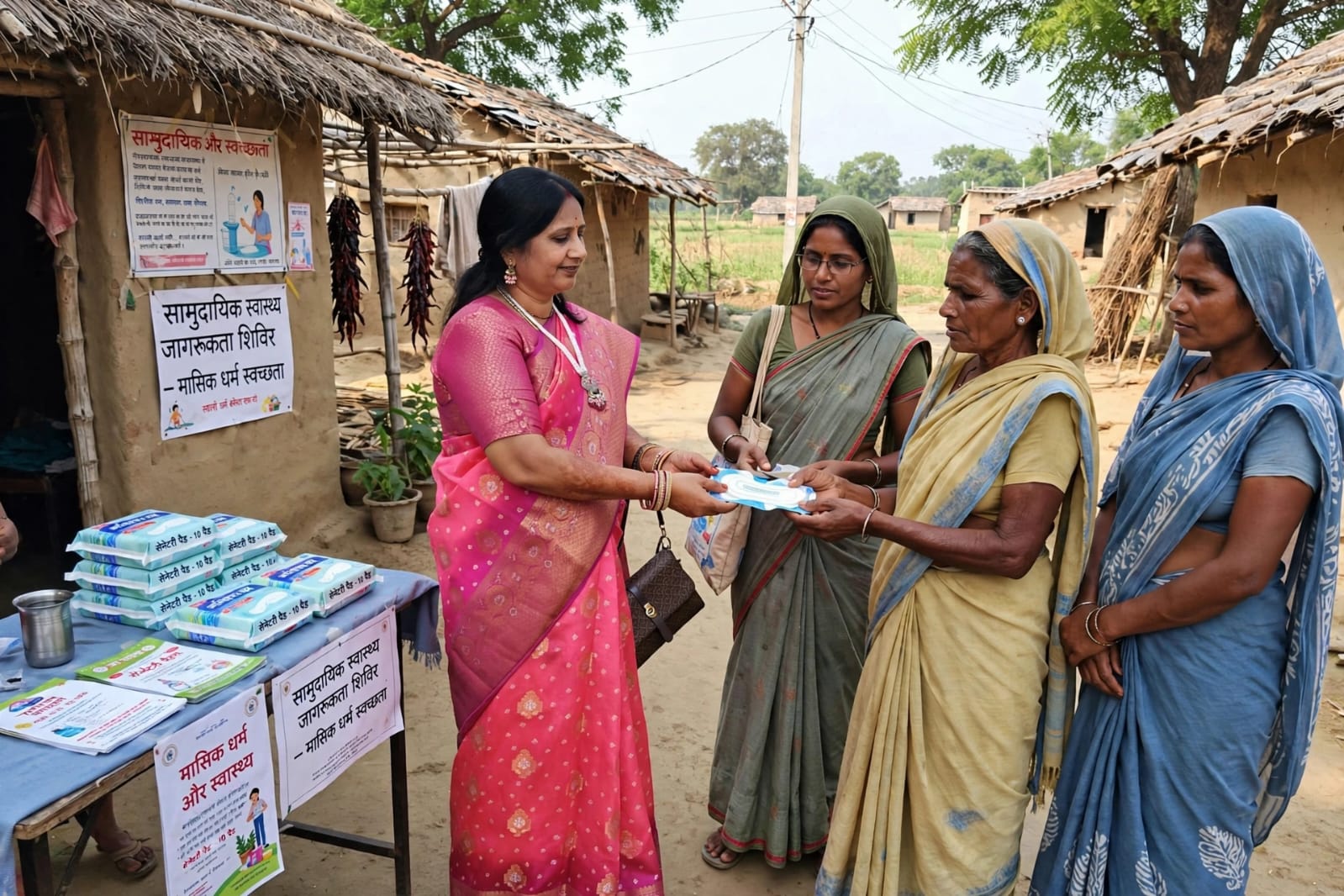
HARSH installs sanitary napkin vending machines in village schools, panchayat bhavans and anganwadi centres, so that a girl does not have to ask anyone, explain anything, or walk to a shop she is embarrassed to enter. Where a machine is not yet viable, our women volunteers run a simple stocked cupboard on the same principle.
Every machine we place is paired with a Mahila Swasthya Jagrukta Shivir — a women’s health awareness camp held in the open, in the local dialect, run by women. We talk about menstrual hygiene without euphemism, about anaemia, about nutrition in pregnancy, and about the infections that follow from using cloth that never fully dries.
We also run a quiet follow-up: a volunteer returns to check that the machine is stocked, that it is working, and that it is actually being used. A machine on a wall that nobody refills is worse than no machine at all, because it lets everybody believe the problem has been solved.
What this looks like in practice
- Sanitary napkin vending machines in schools, panchayat bhavans and anganwadis
- Free pad distribution at every women’s health camp
- Menstrual hygiene, anaemia and nutrition sessions run by women, in the local dialect
- Restocking and working-condition checks on every machine placed
- Referral support for gynaecological complaints to the nearest CHC